AI SDRs vs. Human SDRs: A Comparative Analysis
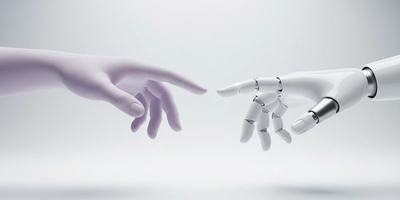
AI SDRs win on reach, speed and cost. Human SDRs win on trust and complex deals. Here is where each fits, and why the strongest teams run both.


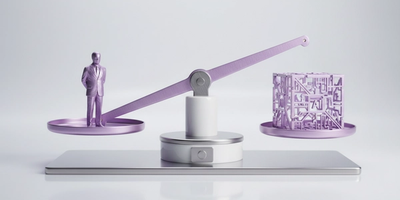
Put an AI SDR and a human SDR side by side and the instinct is to crown a winner. That instinct is the mistake. The two are good at almost opposite things, and the sales teams pulling ahead in 2026 have quietly stopped choosing between them.
The money tells part of the story. A fully loaded human SDR, once you add benefits, tools, management and the months of ramp before they produce, runs well into six figures a year. An AI sales agent costs a fraction of that and works every contact on your list at once. But money is not the whole story. People still build the trust that closes complicated deals, and no software has changed that.
Here is where each one earns its keep, where each one falls down, and why the strongest teams run them together.
The case against the pure-human model
Sales development has a structural problem that predates AI. The Bridge Group's long-running benchmark of hundreds of SaaS sales organizations puts SDR quota attainment at roughly two-thirds in a typical year, a figure that has barely moved in a decade. Median tenure sits under two years, and close to a third of reps turn over annually. New hires need months to ramp before they contribute, so many teams pay full freight for people who leave not long after they finally get good.
None of that makes human SDRs bad at the job. It makes the pure-human model expensive and fragile. The traditional SDR model is under real strain for reasons that have nothing to do with effort. You are asking a person to spend hours on list-building, research and data entry, and Salesforce's research finds reps spend about 70% of their time on that kind of non-selling work. Most of an SDR's day never reaches a real conversation.
What humans do that no model replaces
Humans read a room. They catch the pause before a no, the offhand comment that reveals the real objection, the moment a skeptical buyer starts to lean in. They improvise when a deal goes sideways. They build a relationship that survives a bad quarter.
That relationship is worth more than a dashboard makes it look. Harvard Business Review's research on customer emotion found that fully connected customers are 52% more valuable, on average, than merely satisfied ones, because they buy more, stay longer and recommend more. You do not earn that kind of connection with a perfectly timed automated message. You earn it in conversation. In complex, multi-stakeholder deals, it is often the difference between a signature and a stall.
Where AI changes the math
An AI sales agent does not get tired, distracted or discouraged. It works your entire contact list at once, replies in seconds instead of hours, and runs the same quality of outreach on contact number 2,000 as on the first. For the repetitive top of the funnel, that consistency is hard for any human team to match.
It also absorbs the work people dislike most. McKinsey's research on generative AI in B2B sales makes the case that much of the routine selling workflow, the research, list-building and follow-up, can now be handed to software, which is exactly the work eating that 70% of a rep's week. Do that and the cost curve bends. Where a human SDR runs into six figures, AI sales tooling lands somewhere between a few hundred and a few thousand dollars a month; AvairAI's own plans run from $299 to $2,500. The win is reach, not the sticker price. For the same budget, AI covers far more of the market than another hire would.
Where AI hits its limits
AI's ceiling is the relationship. It cannot build genuine rapport, and it struggles the moment a conversation leaves the script: a creative objection, a political deal with five stakeholders, a buyer who needs to feel understood rather than processed. It can also be confidently wrong, and a model that invents a detail or misreads intent does real damage in front of a prospect. Buyers have also gotten good at spotting outreach that was obviously machine-made. Knowing when automation helps and when it reads as spam is still a human judgment call.
A concrete example
Picture a 12-person B2B SaaS team: two SDRs and three account executives who still prospect between calls. The SDRs can realistically work a few hundred accounts a month, and most of those hours go to building lists rather than talking to buyers. Point an AI sales agent at the same market and it can research and reach thousands of the right contacts on real buying signals, then surface the handful who reply with genuine interest. Those interested leads land in front of the reps, who do the part software cannot: the discovery call, the objection no script anticipated, the close. Same headcount, far more of it spent selling.
The hybrid model, and how the work splits
Run the comparison honestly and there is no winner to crown, only a division of labor. That split is how AvairAI's Pair Selling AI service works: the AI takes the Navigator role and your salesperson drives. The agent handles the grind, finding the right accounts, building a verified contact list, writing and sending personalized outreach, chasing follow-ups and reading reply sentiment. Your reps handle the human work: the calls, the relationship-building, discovery, objection-handling, negotiation and the close.
The line that matters is the handoff. The AI surfaces interested leads; your reps book the meetings and close the deals. The AI never books or qualifies on its own, by design. Teams that get this right define exactly when a prospect moves from the agent to a person, and what context travels with them. Designing that handoff is most of the implementation work, and it is where hybrid programs either succeed or stall.
The market is already leaning this way. Salesforce's State of Sales research found 83% of sales teams using AI saw revenue growth last year, against 66% of teams that had not adopted it. The teams winning are not replacing reps with AI. They are giving reps an AI partner.
How to decide
Lead with AI when volume is the constraint: a large contact universe, fast response windows, and a top of funnel buried in research and admin. Lead with people when the deal is the constraint, the complex, multi-stakeholder cycles where trust, creative problem-solving and negotiation decide the outcome.
Most B2B teams need both, which is the case for a hybrid. Reach for it when different segments deserve different treatment, or when your sales process has clear phases that suit a machine in some and a human in others. Before you commit either way, run the real ROI math for your own funnel instead of trusting a vendor's headline number.
Where this leaves you
The AI-versus-human debate makes a tidy headline and a poor strategy. AI is unmatched at reach, speed and consistency. People are unmatched at trust, judgment and the conversations that actually close. Which one to buy is the wrong question. How to split the work so each does what it does best is the right one.
That is what an AI sales agent is really for: it runs the prospecting so your salespeople can sell. See how the pieces fit, and what a hybrid setup costs, on the pricing page. You never sell alone.
← Back to all articles