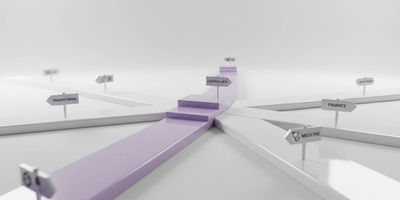
Pair Selling SDR: From Cold Caller to Pipeline Architect
AI absorbs the prospecting grind, and the SDR job shifts from dialing through lists to architecting pipeline. Here is how the Pair Selling SDR role works, and the skills it starts to reward.


Sales reps spend less than a third of their week actually selling. Salesforce's research puts the figure under 30%, with the rest swallowed by research, data entry, internal admin and repetitive follow-ups. For sales development reps, whose whole job is supposed to be the top of the funnel, that ratio stings the most. They were hired to talk to people, and they spend most of the day not talking to anyone.
That gap is the real opportunity in B2B sales right now, and it is what the Pair Selling SDR model is built to close. The interesting question was never whether AI will replace SDRs. It is what an SDR becomes once AI absorbs the busywork, and the answer reshapes the role from cold caller into something closer to a pipeline architect.
Key takeaways
- Pair Selling splits the work by strength: AI agents run the prospecting grind (research, list-building, email outreach and follow-ups), and the rep handles the conversations that build trust and close.
- The time math is the whole case. Reps spend under 30% of their week selling (Salesforce), while AI can absorb the 60 to 70% of work that admin and research swallow (McKinsey).
- The role shifts, it does not shrink. SDRs become pipeline architects who direct the AI, decide where human attention goes and own the relationships.
- The teams adopting it are pulling ahead: 83% of sales teams using AI saw revenue growth last year, against 66% of the teams that did not (Salesforce).
Why the SDR role has to change
The traditional SDR model has a structural flaw. Reps are hired for judgment, communication and the ability to build rapport, then handed a job that mostly is not those things. A typical day goes to researching accounts, updating CRM records, sending templated follow-ups and logging call notes. Necessary work, all of it. None of it needs a human.
Salesforce's research found that reps spend under 30% of their time actually selling. For an SDR, that is the job description turned inside out.
The cost shows up in the numbers. The Bridge Group's SDR Metrics Report has tracked the same pattern for years: average tenure of around 1.4 years and only about 60% of reps hitting quota. The model holds together just well enough to keep running, and badly enough that everyone inside it knows the math does not work. It burns reps out and churns them through, which is a big part of why the traditional SDR model is breaking down.
The Pair Selling methodology starts from that misallocation and fixes it at the root. Stop asking one person to do everything, and divide the work by what AI and humans are each actually good at.
What Pair Selling changes for the SDR
AI as Navigator, the SDR as Driver
Pair Selling borrows its shape from pair programming, where one developer drives while the other navigates. Here the AI is the Navigator and the SDR is the Driver, a split we break down in detail in the Driver and Navigator roles.
The Navigator does the groundwork: account research, building and verifying the contact list, writing the personalized outreach, sending the email touches and keeping the follow-ups on schedule. The Driver does the part that needs a person in the room: discovery, reading the buyer, handling the objection that is in no script, and carrying the relationship toward a close.
So this is not AI doing sales. It is AI doing the work that surrounds sales. How AI SDRs work in practice comes down to consistency at scale: an agent can process more data, never skip a follow-up and run around the clock without fatigue. What it cannot do is build trust or weigh nuance, which is exactly where the human earns the title. That is the premise behind AI as a partner rather than a replacement. The AI makes sure no interested prospect slips through, and the rep turns that interest into a booked meeting and, eventually, a closed deal.
One channel detail is worth getting right. In this model the AI sends the email, but the calls and LinkedIn touches stay in human hands, queued as ready-to-run tasks. The rep walks into each one with the context already gathered.
From cold caller to pipeline architect
The job title may still read "SDR," but the work rotates toward what we would call a pipeline architect, and three things change.
The first is the unit of work. Instead of personally dialing down a list, the architect configures the AI, watches performance and tunes targeting so the right accounts get reached. The second is what gets measured. Calls made and emails sent stop being the scoreboard; qualified pipeline, conversion and the value of opportunities created take over. The third is the relationship to the AI itself. The rep starts to manage the agent a little like a manager coaches a junior teammate, giving direction, reviewing output and correcting course when a campaign drifts.
What the productivity actually looks like
The case for Pair Selling lives in the time math, not in hype. McKinsey estimates that today's AI can automate the activities that absorb 60 to 70% of the average employee's working time. In an SDR's week, that 60 to 70% is precisely the research-and-admin layer that keeps them off the phone and out of inboxes. Hand it to the AI, and the hours come back.
What the rep does with those hours is the point. When the AI carries the volume, the human can spend the day on the handful of conversations that actually move revenue, instead of spreading thin attention across a cold list. The AI handles volume; the rep handles value.
The revenue numbers are starting to follow. Salesforce found that 83% of sales teams using AI saw revenue growth over the past year, compared with 66% of the teams that did not. That gap is the early signal that augmented teams are pulling away from the ones still doing it all by hand.
The skills that start to matter
Orchestrating the AI. The best Pair Selling SDRs are the ones who get the most out of their Navigator. That means knowing which accounts deserve a human touch and which can run on automated outreach, configuring campaigns for a specific objective, and reading the output critically enough to adjust. Five years ago the skill did not exist. Today it is the clearest line between a high performer and an average one.
Going deeper on the relationship. As the AI takes more of the first-touch work, the human touchpoints get more valuable, not less. By the time a rep enters a conversation, the prospect has already shown interest, and shallow rapport will not carry it from there. What does is real discovery, genuine curiosity about the prospect's problem and the kind of connection that earns a next meeting. The premium has moved from volume to depth.
Reading the data. Pair Selling SDRs work with far more signal than the old model ever produced: engagement patterns, what messaging lands with which persona, when an account is warming up. The skill is turning that into decisions. Which accounts get more attention, and when does the AI hand off to a person? Reps who can read the data and act on it create outsized value, which is why it helps to measure what actually matters rather than activity for its own sake.
Putting Pair Selling to work on your team
If you are rolling this out, four moves matter more than the rest.
Start by drawing a clear line between AI work and human work. Research, first-touch email, follow-ups and CRM updates belong with the AI; discovery, objection handling, relationship-building and the handoff to an account executive stay with the rep. Write it down so nobody is guessing.
Then train for the collaboration, because this is not traditional sales training. Reps need to learn how to configure an agent, interpret what it surfaces, give feedback that improves it and recognize the moment a human should step in.
Next, move your metrics from activity to outcome. Counting calls made stops meaning much once the AI is running the outreach. Pipeline generated, conversion and the value of qualified opportunities are what tell you whether the model is working.
Finally, build a career path that rewards AI fluency. The reps who master Pair Selling are exactly the ones you want moving into account executive, ops and leadership seats. Make that ladder explicit, and the path from dialer to strategic seller becomes a reason to stay rather than a reason to churn.
The pipeline architect's edge
The SDR role is not disappearing. It is getting more strategic, and a good deal more interesting. Teams that lean into Pair Selling hand their reps the one thing the old model never could, time to actually sell. Teams that do not will keep trying to out-hustle competitors whose AI runs around the clock.
So the real question is not whether to make the shift, but how fast. Start by auditing where your SDRs' hours go today, flag the tasks an AI agent could take off their plate, and decide which conversations you want them spending the reclaimed hours on. With AvairAI, the only input is your website: the AI builds and runs the campaign and hands your reps ready-to-run call and LinkedIn tasks, so they spend their day on the conversations that close.
That is Pair Selling. The AI runs the grind; your reps run the relationships. You never sell alone.
← Back to all articles